Cast iron & Dutch ovens · How-to
How to Cook Without Non-Stick: Cast Iron & Steel Pans
- Time15 min
- SkillEasy
- Steps8
By TrailFed · Updated November 2026
Preheat the pan first, then add oil, then food, and leave the food alone until it releases on its own. Cast iron needs a seasoned surface and 3–5 minutes of medium heat. Steel needs to be hot enough that a water drop beads and glides, plus a thin layer of oil. Dry food, enough fat and patience do most of the work.
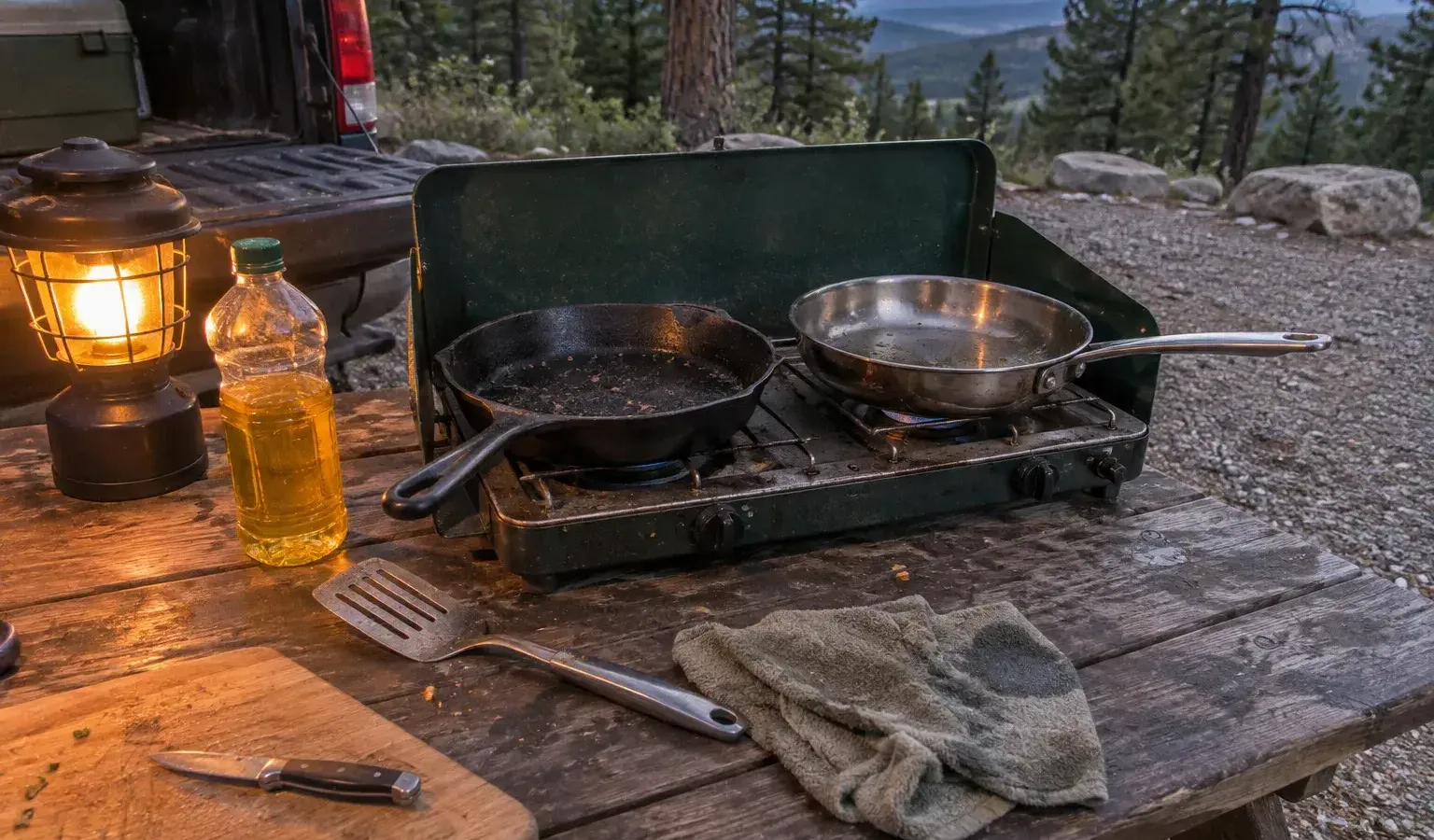 Illustrative Photo
What you need
- Cast iron skillet (seasoned) or carbon steel or stainless steel pan
- Camp stove or a campfire grate with a bed of coals
- Cooking oil with a high smoke point (avocado, canola, peanut or refined vegetable oil)
- Metal or wooden spatula
- Paper towels or a clean rag
- Heat-proof glove or pot gripper
- Food thermometer
- Small cup of water for the heat test
- Dish scraper or chain-mail scrubber and a camp wash bin
Step by step
-
Set up a stable, ventilated cooking spot
Cook outdoors only, on a level surface well away from tents, tarps and dry brush. Make sure the stove or grate cannot rock, because a tipped pan of hot oil is a serious burn.
-
Pat the food dry and let it warm up a bit
Wet food steams and sticks. Blot meat, fish and veggies with paper towels, and let cold meat sit out for no more than 15–20 minutes while the pan heats. Don't leave raw meat out longer than 1 hour in hot weather (90°F or above).
-
Preheat the empty pan
Heat cast iron on medium for 3–5 minutes. Heat stainless or carbon steel on medium for 2–3 minutes. For steel, flick a few drops of water in: if they bead up and glide around like mercury, the pan is ready. If they just sizzle and vanish, wait another 30 seconds. Wipe the pan dry before adding oil.
-
Add oil, then food
Add about 1–2 tablespoons of oil for a 10–12 inch pan and swirl it to coat. When the oil shimmers (before it smokes), add the food. Cast iron and carbon steel hold heat well, so don't overcrowd the pan. Leave space between pieces so the temperature doesn't crash.
-
Leave it alone until it releases
Food sticks when you try to move it too soon. Let meat, potatoes and fish sear for 2–4 minutes, then nudge one piece with a spatula. If it lifts easily and is browned, flip it. If it resists, give it another 30–60 seconds.
-
Cook eggs and delicate foods at lower heat
For eggs, pancakes and fish, drop the heat to medium-low after preheating and use a little extra fat, about 1 tablespoon per 2 eggs. Cook eggs until the whites and yolks are firm. Cook fish to 145°F, ground meat to 160°F and poultry to 165°F, checking with a thermometer.
-
Rescue stuck food while the pan is still warm
Take the pan off the heat and pour in about 1/2 cup of water. Let it simmer 2–3 minutes, then scrape gently with a wooden or metal spatula. Don't dunk a screaming-hot pan in cold water, which can warp steel and crack cast iron.
-
Clean, dry and re-oil
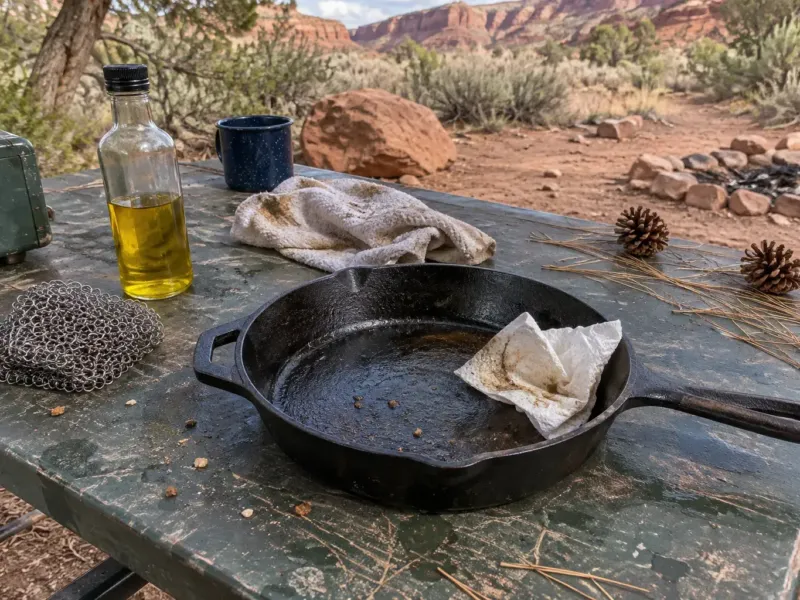
Scrub with hot water and a scraper, using only a drop of soap if you must. Dry the pan on the stove for 1–2 minutes, then rub on a very thin film of oil so it doesn't rust. Strain food bits from the wash water and pack them out, then scatter the strained water at least 200 feet (about 70 adult steps) from streams, lakes and camp.
Tips
- Heat, then oil, then food: it works because hot metal expands and its tiny pores close up, so food has less to grab onto.
- A thin layer of oil is better than a thick one. Too much oil pools and burns, leaving a sticky film.
- Sugary marinades and sauces burn fast. Add them in the last few minutes of cooking.
- On a campfire, cook over glowing coals rather than flames. Flames create hot spots that scorch and stick.
- Don't cook very acidic foods like tomato sauce for long in bare cast iron, since they can strip seasoning and taste metallic.
Quick heat guide by food
| Food | Pan heat | Notes |
|---|---|---|
| Steak, burgers, chicken thighs | Medium to medium-high | Sear 2–4 minutes per side, then check temperature (160°F ground beef, 165°F poultry) |
| Potatoes, onions, peppers | Medium | Cut pieces evenly and don’t crowd the pan |
| Eggs, pancakes | Medium-low | Extra fat helps; cook eggs until firm |
| Fish fillets | Medium | Pat dry, wait for release, cook to 145°F |
Campers ask
Why does food stick to my cast iron pan at camp?
Usually the pan wasn't hot enough when the food went in, the food was wet, or you tried to flip it too early. Thin or damaged seasoning can also cause sticking.
How do I know when a stainless steel pan is hot enough?
Flick a few drops of water into the dry pan. If they form a bead and glide around, it's ready; wipe it dry, add oil, then add food.
What's the best oil for cooking in cast iron or steel at camp?
Pick an oil with a high smoke point, such as avocado, canola, peanut or refined vegetable oil. Butter and olive oil can burn at high heat, but they're fine for finishing or low-heat cooking.
Can I use soap on cast iron while camping?
A small drop of mild soap is fine on a well-seasoned pan, but hot water and scraping are usually enough. Dry the pan right away and wipe on a thin coat of oil.