Stoves & gear · How-to
How to Set Up a Camp Kitchen That Actually Works
- Time15 min
- SkillEasy
- Steps8
By TrailFed · Updated November 2026
Build your camp kitchen in four zones: cold storage, prep, cooking, and cleanup. Put them on level ground at least 10–15 feet from tents, keep the stove away from anything flammable, and set up handwashing and dish bins before you cook. Aim to keep cold food at 40°F or below and hot food at 140°F or above.
 Illustrative Photo
What you need
- Two-burner propane stove or single-burner stove, with fuel
- Cooler with ice or ice packs, plus a cooler thermometer
- Dry-food bin with a lid
- Utensil and cookware bin (pot, pan, knife, cutting board, spatula, tongs, can opener, lighter)
- Water jug with a spout (5–7 gallon size works well for a group)
- Three wash basins or collapsible tubs, biodegradable soap, scrubber, and a strainer
- Hand soap and paper towels
- Food thermometer
- Lantern and headlamp
- Trash bags and a lidded trash bin or bag you can secure
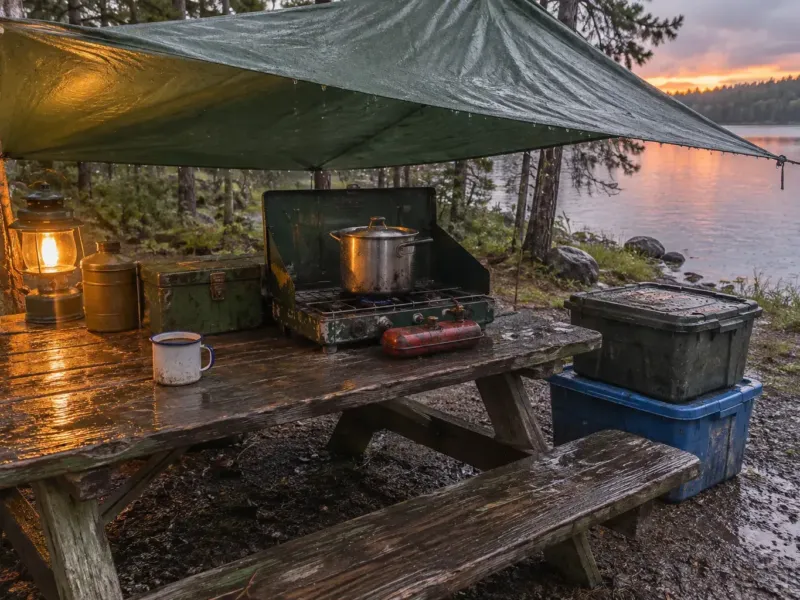
- Tablecloth or clips, and a tarp or pop-up shelter if rain is likely
Step by step
-
Pick the spot and check the hazards
Choose level ground close to the picnic table, with a stove spot at least 10–15 feet from tents and away from dry grass, low branches, and tent walls. Check the wind and keep smoke and sparks away from your sleeping area. Follow local rules for food storage, especially in bear country.
-
Lay out four zones on and around the table
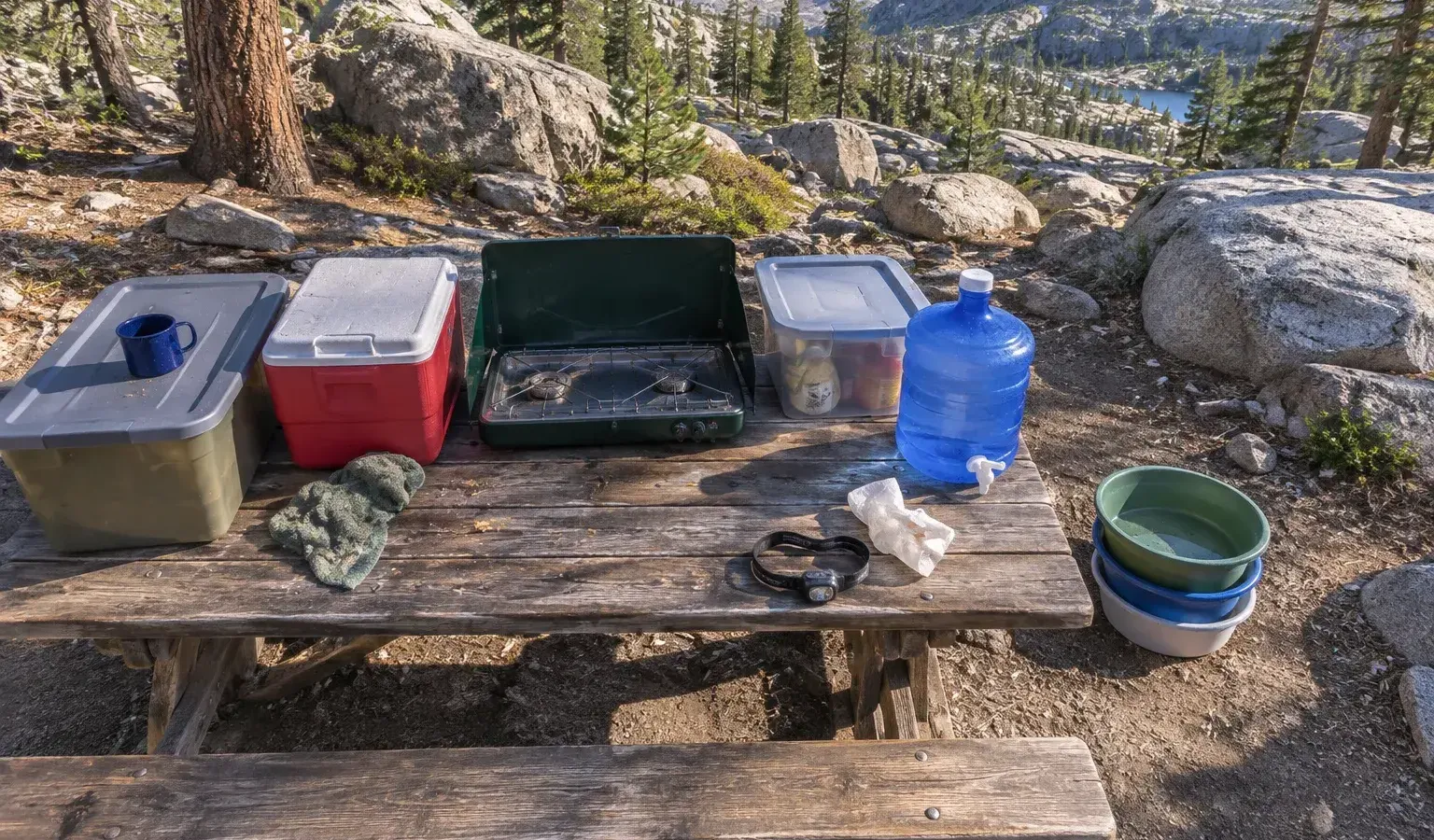
Set cold storage at one end, a prep area with a cutting board in the middle, and the stove at the far end so no one reaches over a flame. Keep the cleanup station off the table, a few feet away, so dirty water and raw-food juices stay away from clean food.
-
Set up the stove on a stable surface
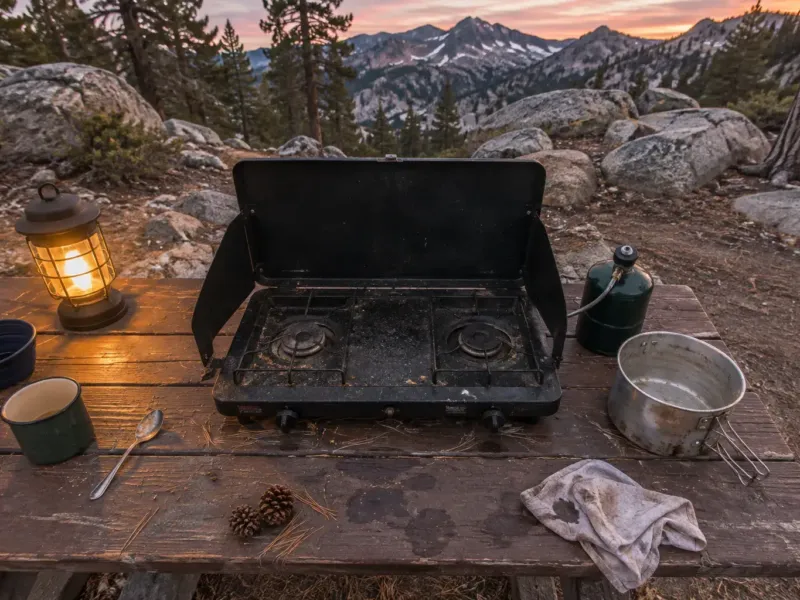
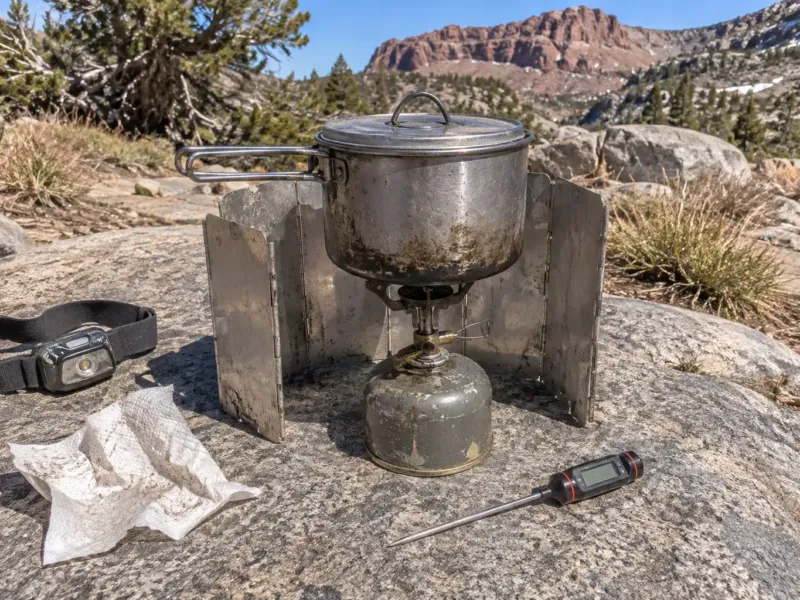
Place the stove on a flat, firm surface with its lid and wind panels positioned according to the manufacturer's instructions. Connect the fuel, check the connection for leaks as the instructions describe, then light it. Leave the lighter and a pot lid within reach but not next to the burner. Never leave a lit stove unattended.
-
Set up cold storage and keep it cold
Keep the cooler in shade, off hot ground, and closed except when you are actually taking something out. Put in a thermometer and check that it reads 40°F or below. Keep raw meat in sealed containers at the bottom, and store drinks in a separate cooler if you can so the food cooler stays closed more.
-
Build the handwashing and dish station
Set up a jug with a spout for handwashing and soap nearby, and wash for 20 seconds before cooking and after handling raw meat. For dishes, set up three basins: wash, rinse, and sanitize. Use hot water, soap, and a scrubber, and dip rinsed dishes in water mixed with 1 tablespoon of unscented household bleach per gallon, then air-dry.
-
Organize storage, light, and trash
Pack the dry foods and cookware into labeled bins, so you can find things without digging. Hang a lantern where it lights the prep and stove area, and keep a headlamp for each cook. Put a lidded trash container or a securely tied bag at the edge of the kitchen, and keep it closed.
-
Cook with a clear workflow
Prep raw meat on a separate board from vegetables and bread, and wash your hands and tools between them. Cook to safe internal temperatures: 165°F for poultry, 160°F for ground meat, and 145°F for whole cuts of beef, pork, and fish. Check with a food thermometer, not by color.
-
Break down the kitchen after each meal
Put away leftovers within 2 hours, or within 1 hour if it is above 90°F. Wash dishes, strain out food scraps, and pack them out with the trash. Scatter the strained dishwater broadly at least 200 feet (about 70 adult steps) from streams, lakes, and campsites, unless local rules say otherwise. Wipe the table, then store food and scented items as the site requires.
Tips
- Use one bin for cookware and one for dry food so the kitchen can be set up and packed in minutes.
- Keep a roll of paper towels or a clean towel in a zip bag, plus a small bottle of hand sanitizer for when the sink is busy.
- Use a clip-on tablecloth or table clamps so the wind does not steal your setup.
- Do a quick walk-through before you leave: look for crumbs, bits of foil, and twist ties that might attract wildlife.
Quick Reference: Safe Temperatures
| Food | Safe temperature |
|---|---|
| Cold storage (cooler) | 40°F or below |
| Hot holding | 140°F or above |
| Poultry, leftovers, casseroles | 165°F |
| Ground beef, pork, lamb | 160°F |
| Whole beef, pork, lamb, fish | 145°F |
Campers ask
How far should a camp kitchen be from the tent?
At least 10–15 feet is a practical minimum for fire safety, and in bear country many areas ask you to cook and eat well away from where you sleep. Follow local regulations, which may require more distance, such as about 100 yards.
What is the basic safe food temperature for camping?
Keep cold foods at 40°F or below and hot foods at 140°F or above. Food left in between, called the danger zone, should not stay out longer than 2 hours, or 1 hour when it is above 90°F.
Where do I dump dishwater at a campsite?
Strain out food bits and pack them out with the trash, then scatter the dishwater broadly at least 200 feet from water sources and camp, following Leave No Trace guidance. Use only small amounts of biodegradable soap, and not directly in lakes or streams.
What is the most important thing to bring for a camp kitchen?
A reliable stove with enough fuel, a cooler with a thermometer, and a handwashing and dish setup matter most. They help you cook food safely and keep the camp clean.