Stoves & gear · How-to
How to Choose a Camp Stove (Propane, Canister, Liquid)
- Time15 min
- SkillEasy
- Steps7
By TrailFed · Updated November 2026
For car camping, a two-burner propane stove is the easiest choice for most people. For backpacking, a small canister stove is the usual pick. Choose a liquid-fuel stove for deep cold, high altitude or long expeditions. Match the stove to how you travel, how many people you feed and how cold it will be.
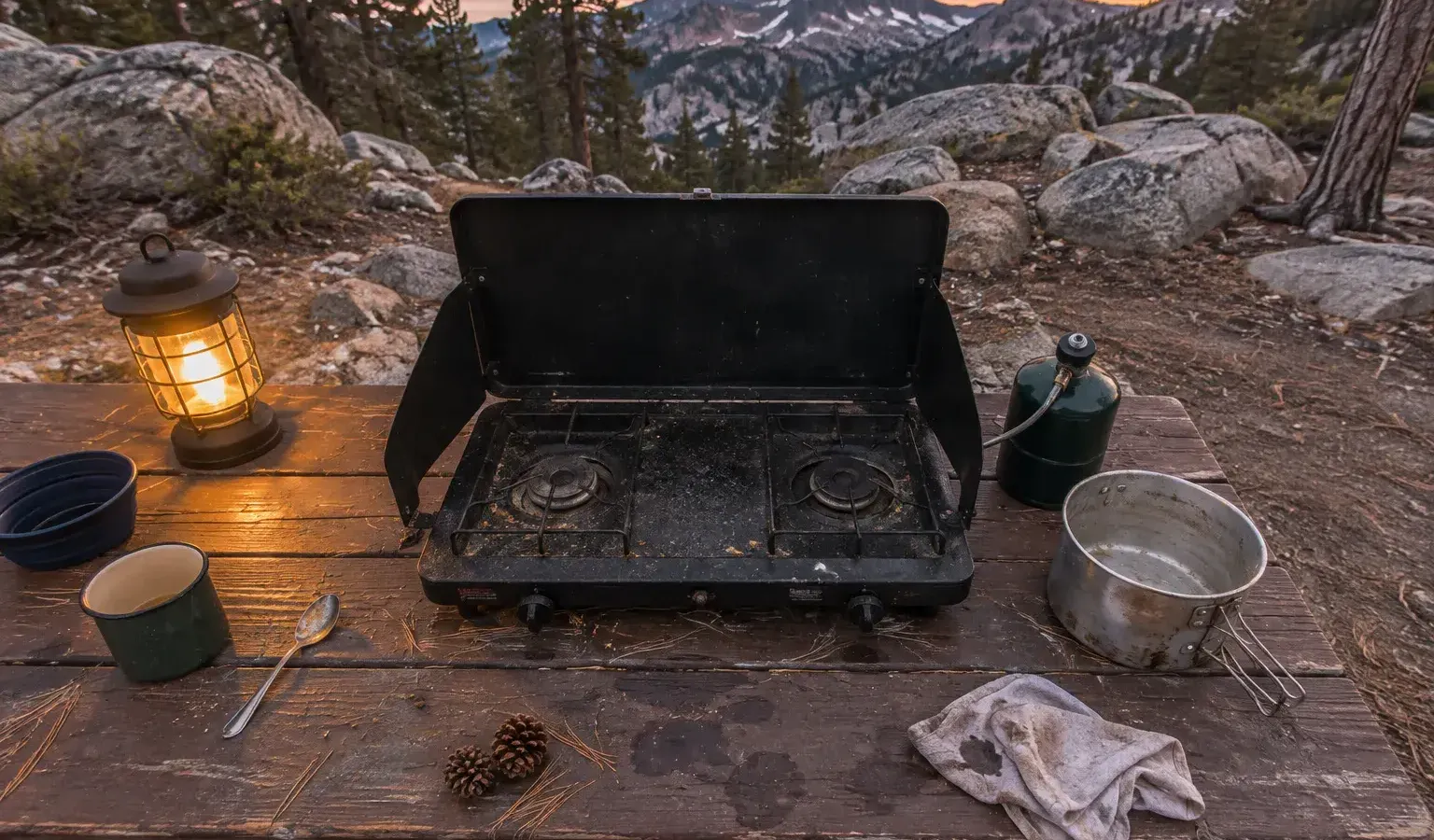 Illustrative Photo
What you need
- Your trip details (group size, number of nights, expected low temperature)
- A rough meal plan
- Stove fuel to match the stove type
- Lighter or matches
- Windscreen made for your stove type
- Pot or pan that fits the burner
- Soapy water in a spray bottle for leak checks
Step by step
-
Decide how you will get to camp
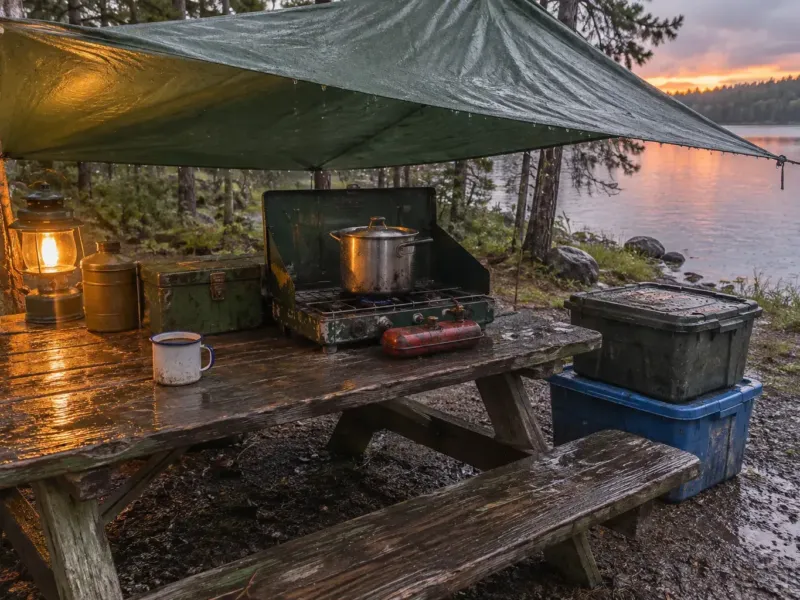
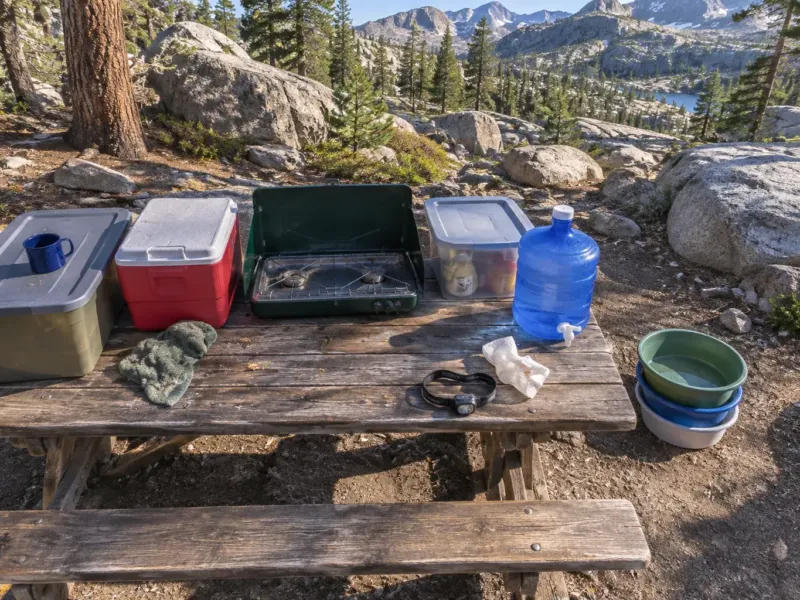
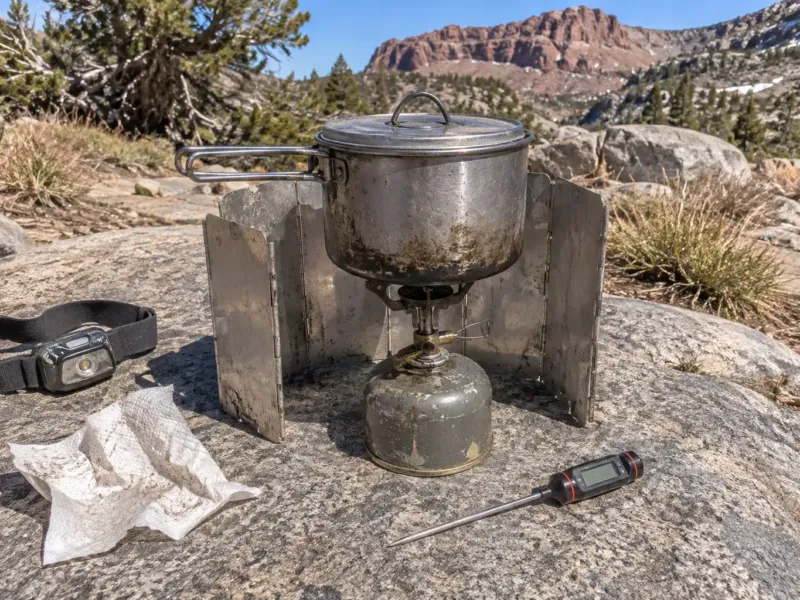
If you drive up and unload at a site, weight and size barely matter, so a two-burner propane stove is practical. If you carry everything on your back, you want a canister or liquid-fuel backpacking stove that fits in a pot.
-
Count mouths and meals
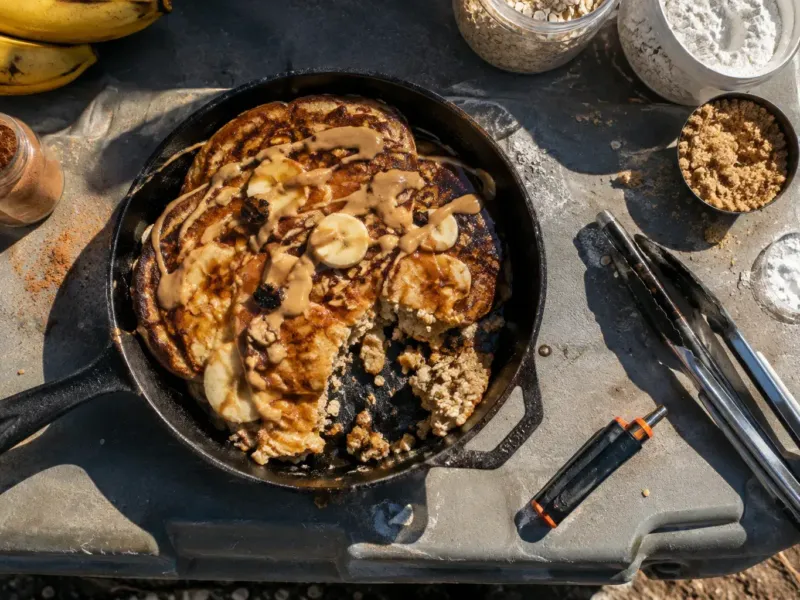
Cooking for 1–2 people on boil-and-eat meals suits a single-burner stove. For 3 or more people, or meals like pancakes with bacon and coffee, you want two burners so you can cook things at once.
-
Pick a fuel for your conditions
Propane cylinders are cheap and easy to find, and they work well in cool weather. Isobutane-propane canisters are light and simple, but pressure drops in the cold, so they struggle below freezing. Liquid fuel (white gas) works in deep cold and at altitude and is refillable, but it needs priming and more care. Alcohol and wood-burning stoves are light and simple, but they are slower and are often restricted in dry seasons.
-
Match features to how you cook
Look for a regulator (steadier flame in cold or low fuel), a wind-blocking design and adjustable flame for simmering. If you plan to fry or cook in a big pan, check that the burner is wide enough and the stove is stable. For boil-only meals, a compact stove with an integrated pot heats water efficiently.
-
Check fire rules and fuel availability
Before you go, check the land manager's fire restrictions. Many areas ban campfires but allow stoves with an on/off valve, while others ban all open flames in extreme conditions. Also confirm that the fuel you need is sold near your trailhead or campground, because canister brands and sizes vary by region.
-
Estimate how much fuel to bring
A 1 lb propane cylinder gives roughly 1.5–2 hours of cooking on one burner on high. For a weekend with two people cooking simple meals, plan a spare cylinder. For backpacking, a 230 g canister typically covers a few days of boil-and-eat meals for two, but fuel use rises with wind, cold and frying, so bring a margin.
-
Test it at home before you leave
Connect the fuel, check for leaks with soapy water (bubbles mean a leak), light the stove and boil 1 liter of water, timing it. Then you know how it performs and how much fuel a typical meal uses before you are hungry at camp.
Tips
- Buy a stove for the trips you actually take most, not the biggest adventure you might do someday.
- A windscreen can cut boil time a lot, but never wrap one tightly around a canister stove; trapped heat can overheat the canister.
- In cold weather, keep a canister in an inside pocket or sleeping bag before cooking so it stays warm enough to work.
- Bring a lighter and a backup ignition method, since built-in igniters fail with damp or dirt.
- Cook your first meal at home on the stove so you know the flame control.
Camp stove types at a glance
| Stove type | Best for | Pros | Trade-offs |
|---|---|---|---|
| Two-burner propane | Car camping, groups | Cooks like a home stove, easy fuel | Heavy and bulky |
| Single-burner propane | Small groups, short trips | Compact, cheap fuel | One pot at a time |
| Canister (isobutane-propane) | Backpacking, solo or pair | Light, simple to use | Weak in cold, fuel is costly |
| Liquid fuel (white gas) | Winter, altitude, long trips | Reliable in cold, refillable | Priming, more upkeep |
| Alcohol or wood-burning | Ultralight, simple trips | Very light, cheap fuel | Slow, often restricted in fire bans |
Campers ask
What is the best camp stove for beginners?
A two-burner propane stove is the easiest for car camping because the fuel is cheap, easy to find, and the burners work like a home stove. For backpacking, a basic canister stove is the simplest option.
Do I need two burners?
Not always. One burner is fine for boiling water and one-pot meals. Two burners help when you cook for 3 or more people or want to cook a main and a side at the same time.
Which camp stove fuel works best in the cold?
Liquid fuel (white gas) is the most reliable in deep cold. Propane also works well in cool weather, while isobutane-propane canisters lose pressure near freezing, so keep them warm.
Can I use a camp stove inside my tent?
No. Stoves can start fires and produce carbon monoxide, which can be deadly in an enclosed space. Cook outside, well away from tent walls.