Food safety & coolers · How-to
How to Pack a Cooler for Camping (Keep Food Cold Longer)
- Time15 min
- SkillEasy
- Steps8
By TrailFed · Updated November 2026
Chill the cooler and the food first, then pack in layers: block ice or frozen jugs on the bottom, raw meat sealed below everything else, ready-to-eat food above, and more ice on top. Aim for roughly half ice by volume, keep the lid shut in the shade, and keep food at 40°F or below.
 Illustrative Photo
What you need
- Cooler with a tight-sealing lid
- Block ice, frozen water jugs or large ice packs
- Bag of cubed ice to fill gaps
- Frozen or well-chilled food
- Leakproof containers or zip-top bags
- Appliance thermometer (fridge/freezer type)
- Second small cooler for drinks (optional)
- Blanket, tarp or reflective cover
- Towel or pallet to keep the cooler off hot ground
Step by step
-
Pre-chill the cooler
The night before, bring the cooler inside and fill it with a few sacrificial ice packs, or a bag of ice, for 12 to 24 hours. A warm cooler wastes a lot of your ice just cooling its own walls. Dump the sacrificial ice before packing.
-
Chill and freeze your food
Refrigerate everything overnight, and freeze meat, marinated items and any meals for days 2 and 3. Frozen meat acts as extra ice. Make sure a frozen item you want for dinner on day 3 will still be thawed enough to cook.
-
Make your ice
Freeze water in reusable jugs or containers a day or more ahead; large blocks melt much slower than cubes. Plan for about half the cooler volume as ice (roughly 2 parts ice to 1 part food). Keep a bag of cubed ice for filling gaps.
-
Pack in layers
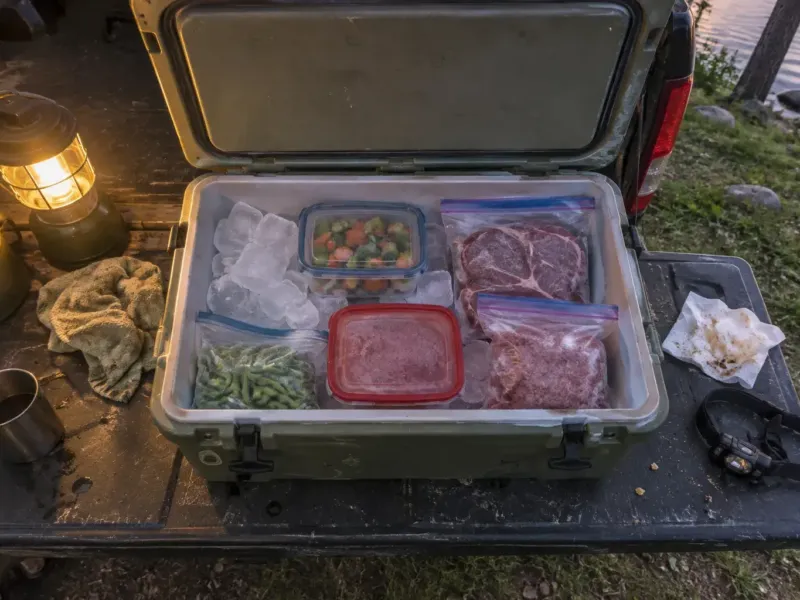
Put block ice or frozen jugs on the bottom, then frozen meat sealed in leakproof containers. Next add dairy, eggs and other food, with delicate produce on top. Fill gaps with cubed ice, then add a final layer of ice on top because cold air sinks.
-
Pack in the order you will eat
Put day 3 meals toward the bottom and day 1 on top so you are not digging around with the lid open. Label containers or keep a short packing list taped to the lid.
-
Split drinks from food
Use a second cooler for drinks, which get opened all the time. Keep the food cooler closed except when you need it.
-
Place it right at camp
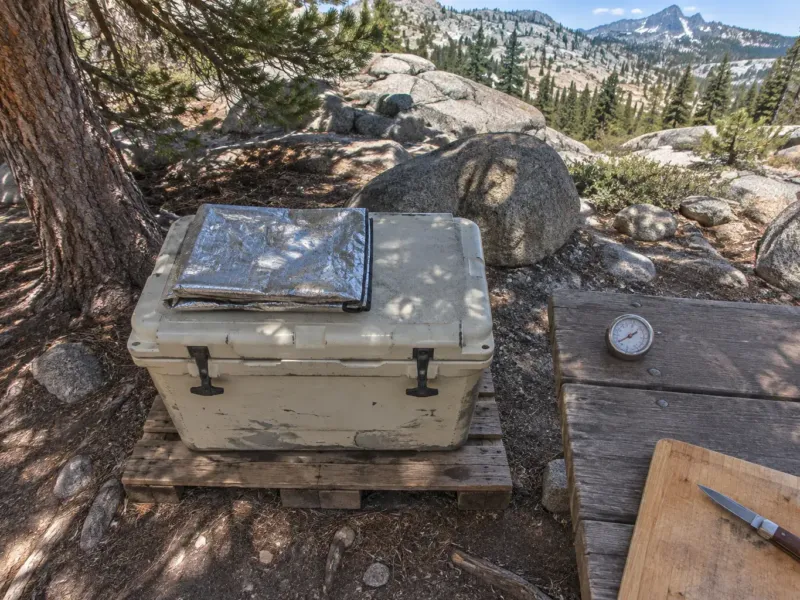
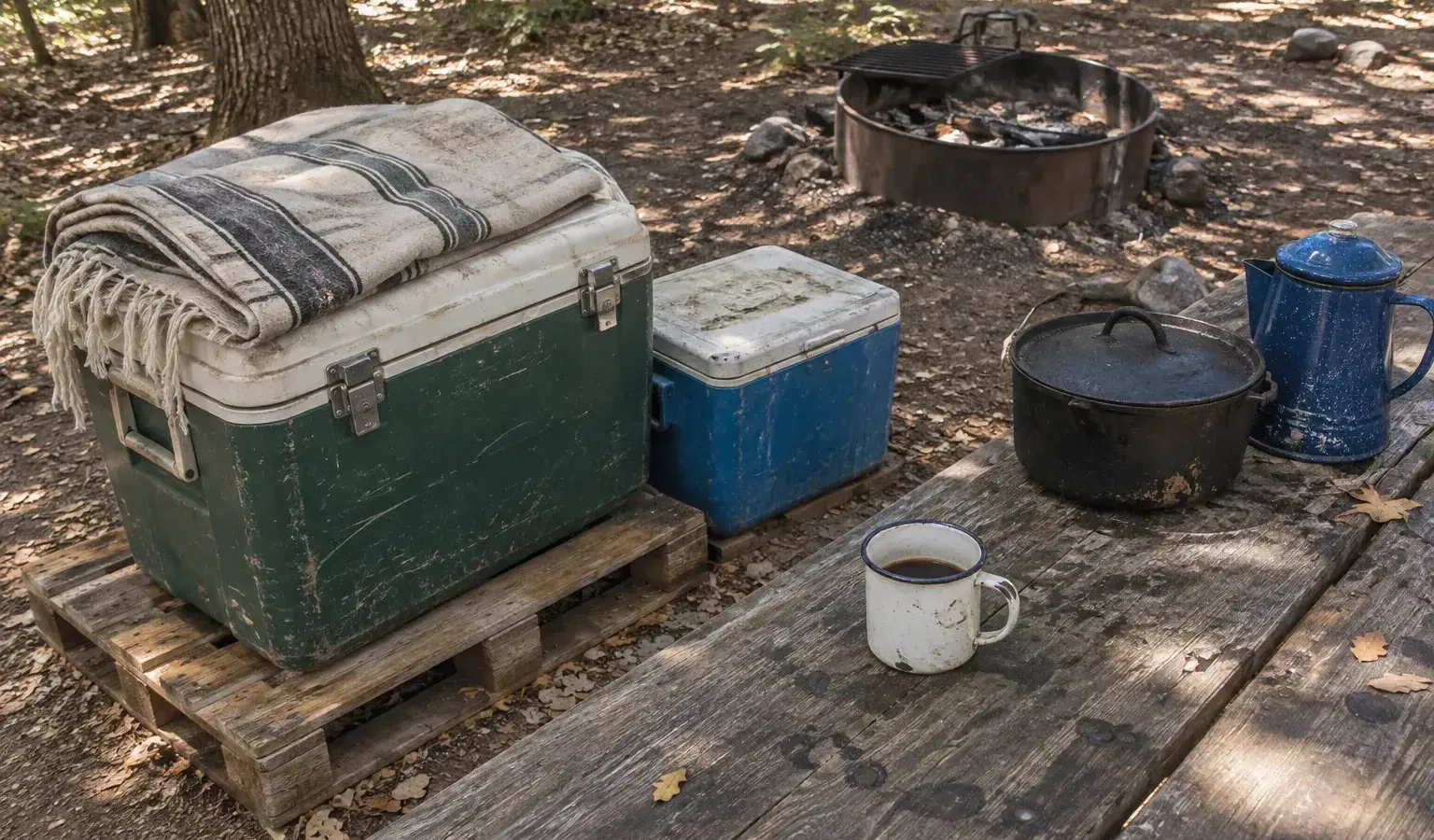
Put the cooler in full shade, up off hot ground on a pallet, log or towel. Cover it with a light-colored blanket or tarp, and keep the lid latched. In the car, keep it in the air-conditioned cabin rather than the trunk.
-
Check temperature and manage meltwater
Keep an appliance thermometer inside and check that it reads 40°F or below. Drain meltwater when it gets warm or cloudy, or if raw meat juices got into it, and add ice as needed. Cold meltwater itself helps keep things cold, so do not drain it all the time.
Tips
- Dry ice is not necessary for most trips, and it needs ventilation and gloves; use regular ice unless you are experienced.
- Use a hard-sided cooler with a good gasket for trips longer than 2 days; soft coolers suit day trips.
- Keep food in sealed containers or zip-top bags so it never sits in meltwater.
- Open the lid as little as possible, and decide what you need before you open it.
- Add fresh ice each day or two in hot weather; a full cooler stays cold longer than a half-empty one.
Quick packing order, bottom to top
| Layer | What goes in |
|---|---|
| 1 (bottom) | Block ice or frozen jugs |
| 2 | Frozen raw meat in sealed containers |
| 3 | Dairy, eggs, deli meats, other chilled food |
| 4 | Produce and delicate items |
| 5 (top) | Cubed ice, then a final ice layer |
Campers ask
How much ice should I put in a cooler for camping?
Plan for roughly half the cooler by volume, or about 2 parts ice to 1 part food. Block ice or frozen jugs last longer than cubes, and you can add cubes to fill gaps.
Should I drain the water from my cooler?
Drain it if it's warm, if it has been contaminated by raw meat juices, or if food is sitting in it. Otherwise cold meltwater helps insulate, as long as food is in sealed containers.
How long does ice last in a cooler when camping?
It depends on the cooler, the temperature and how often you open it. A pre-chilled, full cooler with block ice in the shade often lasts a few days, but check with a thermometer rather than trusting a guess.
Is it better to use block ice or cubed ice?
Block ice melts more slowly because it has less surface area, so it makes a better base. Cubed ice cools food faster and fills gaps, so use some of both.