Food safety & coolers · How-to
How to Keep Food Cold While Camping Without Electricity
- Time15 min
- SkillEasy
- Steps8
By TrailFed · Updated November 2026
Keep perishable food at 40°F or colder with a pre-chilled, well-insulated cooler packed with about twice as much ice as food. Freeze what you can, keep the cooler in shade and closed, and check it with a thermometer. A good hard-sided cooler can hold safe temperatures for several days this way.
 Illustrative Photo
What you need
- Hard-sided cooler (the best insulated one you have)
- Block ice or frozen gallon jugs, plus cubed ice
- Appliance or cooler thermometer
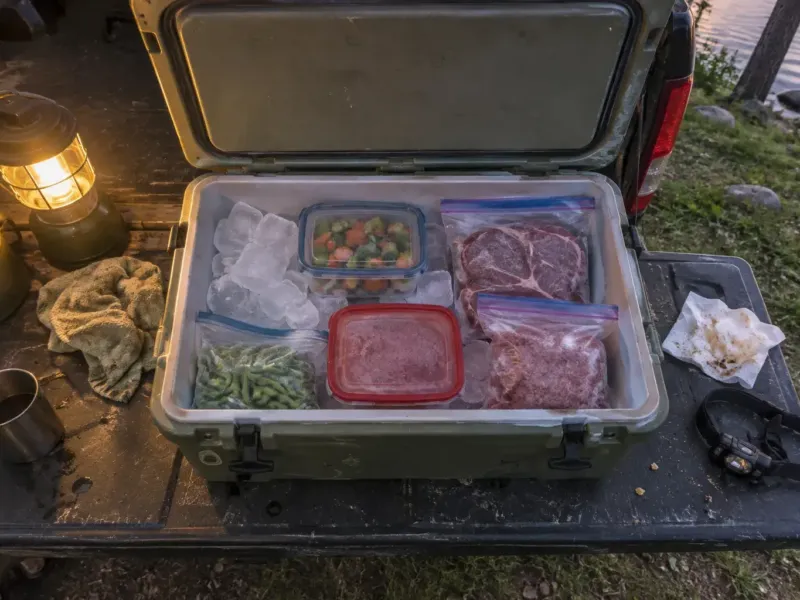
- Sealed containers or zip-top bags for raw meat
- Second cooler for drinks (optional)
- Reflective blanket or light-colored towel
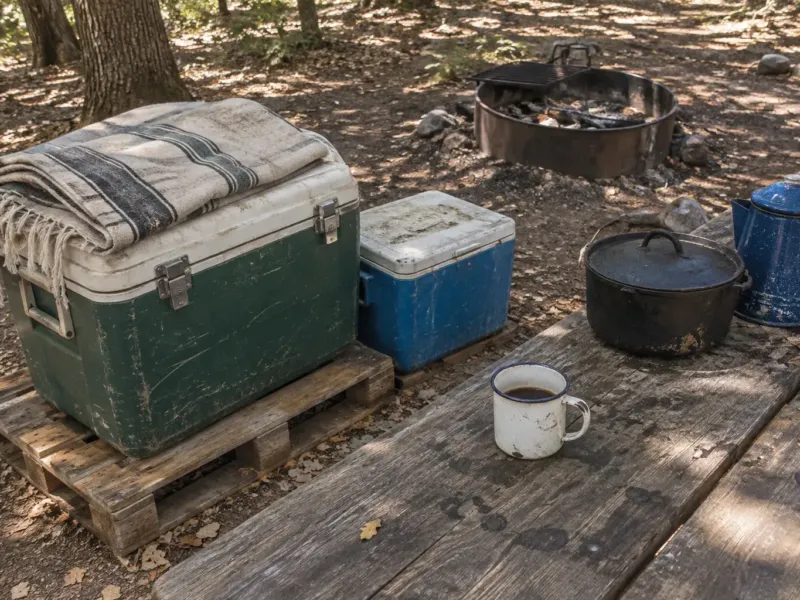
- Pallet, flat rock or cooler stand to keep it off the ground
Step by step
-
Pre-chill everything
The night before, put a few frozen jugs or a bag of sacrificial ice in the empty cooler and keep it in a cool room. Refrigerate or freeze all food and drinks before they go in. Warm food and a warm cooler can melt a third of your ice before you leave home.
-
Freeze what you can
Freeze raw meat, fish and make-ahead meals solid, then use them as extra ice that thaws slowly in the cooler. Freeze water in 1-gallon jugs or large containers. They last longer than cubes and give you cold drinking water as they melt.
-
Load ice-heavy and in layers
Aim for about 2 parts ice to 1 part food by volume. Put block ice or frozen jugs on the bottom, raw meat in sealed containers beneath ready-to-eat food, and cubes in the gaps. Fill any dead air with towels or extra ice, since empty space warms faster.
-
Site the cooler in shade
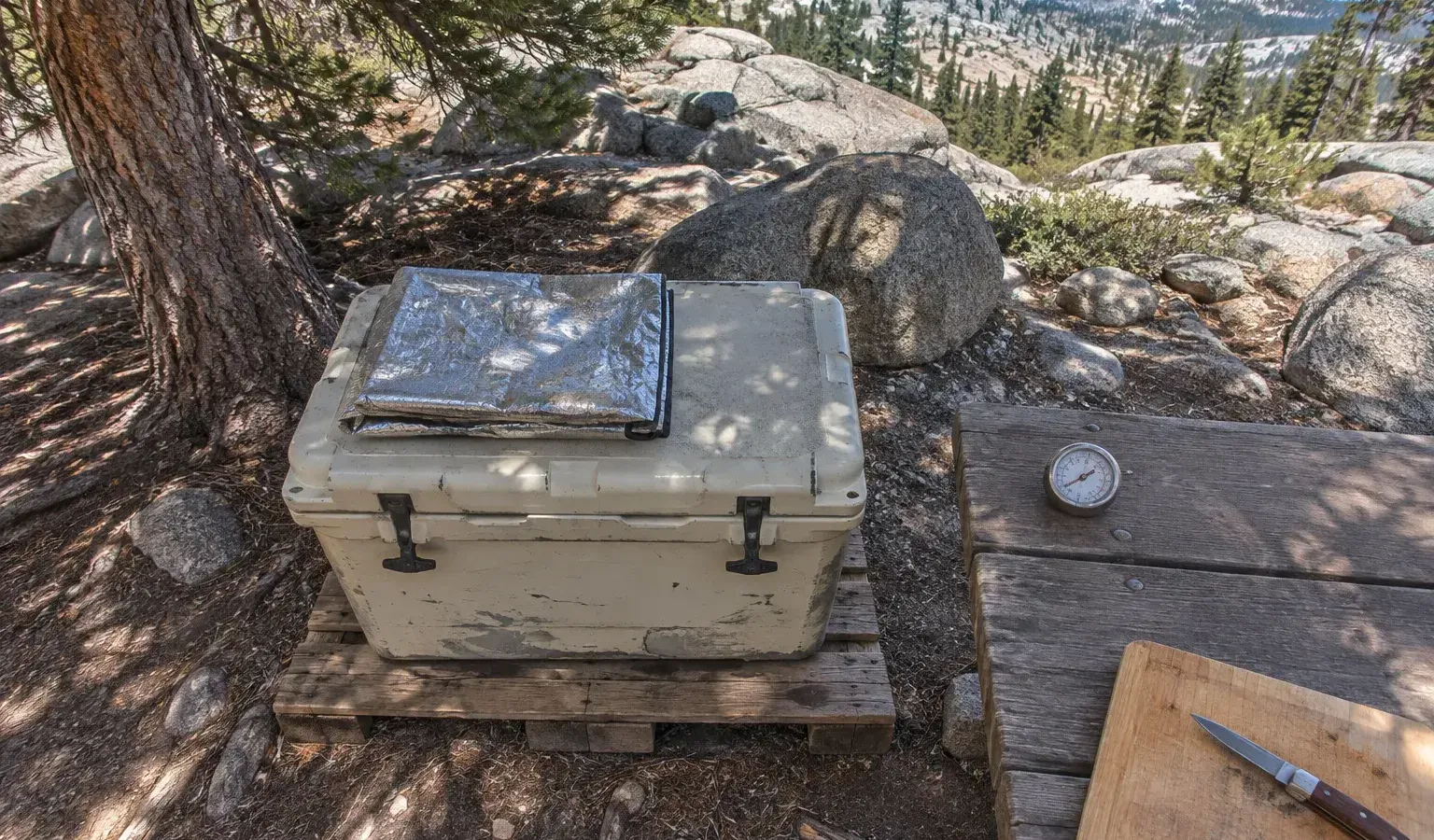
Set it in the deepest shade you can find, up on a pallet, flat rock or a folded tarp so it's not on hot ground. Cover it with a light-colored towel or reflective blanket and re-wet the cover in dry heat. Never leave it in a parked car or tent, where it will bake.
-
Open it as little as possible
Decide what you need before you lift the lid and close it right away. Pack a separate cooler for drinks and snacks, since those get opened constantly. Each long open lets warm air in and costs you ice.
-
Check the temperature twice a day
Keep a thermometer inside and read it in the morning and evening. The food zone should stay at 40°F or below, and the cold part of the cooler should hold well under that. If it creeps up, add ice and move the cooler to deeper shade.
-
Manage meltwater and restock
Cold meltwater still helps insulate, so drain it only when it's deep enough to soak packages. Keep food in sealed containers so it stays dry. Replace ice when the cooler is mostly water, ideally every 1–2 days in hot weather.
-
Eat perishables first, know when to toss
Eat fresh meat, fish and dairy in the first 1–2 days and save hard cheese, cured meats and shelf-stable food for later. USDA guidance is to discard perishable food that has sat above 40°F for more than 2 hours, or more than 1 hour if it's above 90°F outside. When in doubt, throw it out.
Tips
- A cooler packed full holds temperature much better than a half-empty one, so use a smaller cooler for short trips.
- Frozen water bottles or jugs double as drinking water, so you never carry dead weight.
- Open canned or packaged food in the shade, and keep a small bag of lunch food on top so you don't dig through the cooler.
- Pack a few shelf-stable meals such as tortillas, peanut butter, canned beans, tuna pouches and shelf-stable milk as a backup if the ice runs out.
- Cool-down time matters: a warm cooler loaded at the trailhead loses ice fast, so pre-chill it even for a one-night trip.
What to Eat When: Cooler Meal Order
| Day | Eat | Why |
|---|---|---|
| Day 1 | Fresh or thawed raw meat, fish, ground meat | Highest risk, so eat it while the cooler is coldest |
| Day 2 | Frozen-then-thawed meat, eggs, dairy, deli meat | Stays cold in the middle of the trip |
| Day 3+ | Hard cheese, cured sausage, fresh produce, shelf-stable meals | Lower risk once ice is mostly melted |
A Note on Dry Ice
Dry ice keeps things frozen longer than water ice, but it is -109°F and releases carbon dioxide. Wear gloves, never handle it bare-handed, and never seal it in an airtight container. Keep it out of tents and closed car cabins, and keep it away from food you don’t want frozen, like produce.
Campers ask
How long will ice last in a cooler while camping?
A quality hard-sided cooler packed with block ice, kept in shade and opened rarely, can hold ice for 3–5 days or more. Cheaper coolers, summer heat and frequent opening can cut that to 1–2 days.
Is block ice or cubed ice better for camping?
Block ice or large frozen jugs melt slower and last longer, while cubes cool food faster and fill gaps. Using both is the best approach.
Should I drain the water from my cooler?
Cold meltwater helps keep things cool, so drain only when it's deep enough to reach food. Keep food sealed and off the water.
Can I keep food cold in a stream or a hole in the ground?
Not safely for meat, dairy or eggs. Stream water and soil temperatures vary and can sit above 40°F, and animals or floods can take the food. Use a cooler with ice.