Stoves & gear · How-to
How to Cook at High Altitude While Camping
- Time15 min
- SkillTakes practice
- Steps8
By TrailFed · Updated November 2026
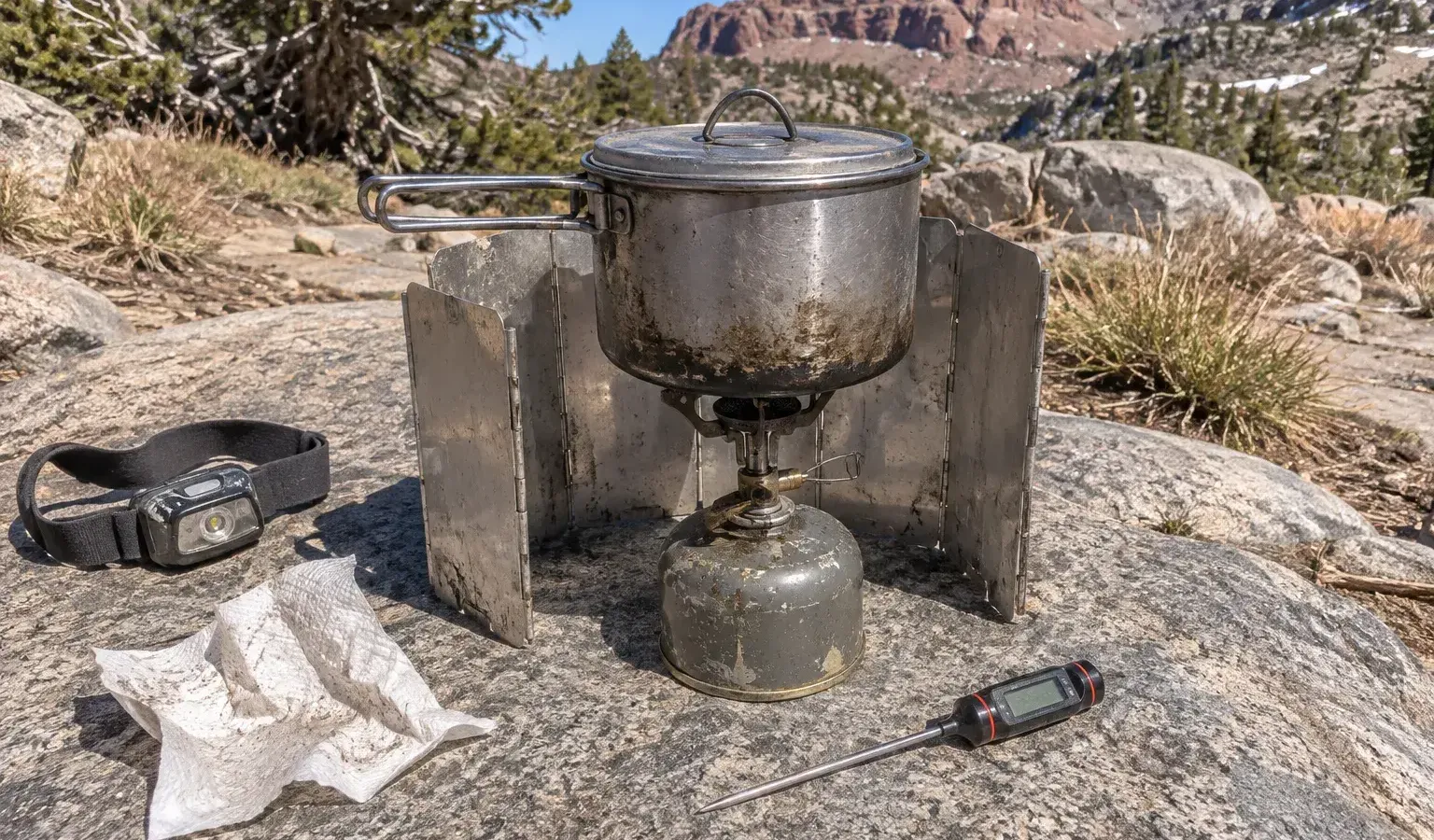
Water boils at a lower temperature as you climb, about 1°F lower for every 500 feet, so food in a pot cooks slower and needs more time, more water, and more fuel. Plan on a lid, a windscreen, extra fuel, and a thermometer. Meat safety temperatures don't change with elevation, so cook to the same numbers as at home.
 Illustrative Photo
What you need
- Stove with extra fuel (about a third more than you'd bring at low elevation)
- Pot with a tight-fitting lid
- Windscreen (for liquid-fuel or remote-canister stoves only)
- Instant-read food thermometer
- Extra water for cooking
- Presoaked or quick-cooking beans, lentils and grains
- Insulated pot cozy or a spare jacket for rehydrating meals
- Lighter or matches, plus a backup
Step by step
-
Know what altitude does to your pot
Water boils at about 212°F at sea level, about 202°F at 5,000 ft, and about 194°F at 10,000 ft. Cooler boiling water means pasta, rice, beans and potatoes take noticeably longer, even though the pot looks like it's boiling hard.
-
Pack extra fuel and set up out of the wind
Bring roughly a third more fuel than you'd plan for at low elevation, since cooking times are longer and mountain air is often cold and windy. Set the stove on flat, stable ground, use a windscreen with liquid-fuel stoves, and keep a lid on every pot.
-
Keep canister fuel warm
Cold canisters lose pressure and the flame weakens. Use an isobutane-propane blend rather than straight butane, and keep the canister in a jacket or sleeping bag until you cook. Never heat a canister with a flame or wrap a windscreen around it, because overheating can cause a rupture.
-
Adjust boiled foods
Start with extra water and a tight lid, since water evaporates fast in dry mountain air. For rice, try about 1/4 cup extra water per cup of rice and expect 5 or more extra minutes. For pasta, add a few minutes and taste for doneness. Soak dried beans overnight and expect them to need a much longer simmer.
-
Rehydrate meals with patience
Pour boiling water into freeze-dried or dehydrated meals, seal, and wait a few minutes longer than the package says. Tuck the pouch in a pot cozy or jacket to hold heat, then stir and check that nothing is crunchy before eating.
-
Cook meat to the same safe temperatures
USDA temperatures don't change with elevation: 165°F for poultry and leftovers, 160°F for ground meat, 145°F for whole cuts of beef, pork and fish (with a 3-minute rest for whole cuts). Because heat is lower and cooking is slower, use a thermometer and don't go by the clock or color.
-
Boil drinking water longer
For water from streams or lakes, CDC guidance is a rolling boil for 1 minute, or 3 minutes above about 6,500 ft (2,000 m). Let it cool covered, and see our water purification guide for filter and treatment options.
-
Bake with small adjustments
In a Dutch oven or camp oven, batters and doughs rise faster and dry out faster at elevation. Use a little less leavening and sugar, a little more liquid, and check for doneness early. The table below gives general starting points.
Tips
- Pre-cook or soak beans, lentils and whole grains at home, or choose quick-cooking versions, to save fuel at camp.
- Put a lid on everything and turn the flame down once boiling starts. A harder boil doesn't make water hotter.
- Cut vegetables and meat into smaller pieces so they cook through faster.
- Hard-boiled eggs need a longer cook at elevation, so simmer them a few minutes more than at home and test one.
- Altitude and dry air dehydrate you, so drink water and eat salty snacks along with meals.
Boiling point by elevation
| Elevation | Water boils at (approx.) |
|---|---|
| Sea level | 212°F (100°C) |
| 5,000 ft (1,500 m) | 202°F (95°C) |
| 7,500 ft (2,300 m) | 198°F (92°C) |
| 10,000 ft (3,000 m) | 194°F (90°C) |
Dutch oven baking starting points (above about 3,000 ft)
These are general starting points, so adjust to taste and results.
| Ingredient or setting | Adjustment |
|---|---|
| Baking powder or soda | Cut by about 1/8 tsp per teaspoon called for |
| Sugar | Cut by 1 to 2 Tbsp per cup |
| Liquid | Add 1 to 4 Tbsp per cup |
| Heat | Raise by about 15 to 25°F and start checking early |
Campers ask
Does food take longer to cook at high altitude?
Yes. Water boils at a lower temperature as elevation rises, so boiled and simmered foods like pasta, rice, beans and potatoes need more time and more water.
Are meat safety temperatures different at high altitude?
No. USDA internal temperatures stay the same: 165°F for poultry, 160°F for ground meat, and 145°F for whole cuts and fish. Use a thermometer because cooking times run longer.
How long should I boil water at high altitude?
The CDC says boil for 1 minute at most elevations and 3 minutes above about 6,500 ft (2,000 m). Start timing once the water is at a full rolling boil.
Do camp stoves work at high altitude?
Yes, but cold and wind are the bigger issues. Keep canisters warm, use an isobutane-propane blend, shield the flame from wind, and carry extra fuel.