Meal planning · How-to
How to Plan Meals for a 3-Day Camping Trip
- Time15 min
- SkillEasy
- Steps8
By TrailFed · Updated November 2026
Plan three days of camp meals by listing nine meals (3 breakfasts, 3 lunches, 3 dinners) plus snacks, eating perishables first and shelf-stable food last, and doing as much prep at home as you can. Budget roughly 2,000–3,000 calories per adult per day, and pack one backup meal that needs no cooking.
 Illustrative Photo
What you need
- Pen and paper or a notes app
- Headcount and any dietary needs
- List of your cooking gear (stove, pots, fuel)
- Cooler with ice or frozen water jugs
- Food thermometer and cooler thermometer
- Resealable freezer bags and a marker
- Dry-goods bin with a lid
- Water containers
Step by step
-
Check your cooking setup and limits
Write down how many people are eating, what you'll cook on (one-burner stove, two-burner stove, campfire) and how big your cooler is. Check the campground for fire restrictions, since a ban means stove-only meals. Note allergies and preferences now so you don't rework the menu later.
-
Map out nine meals, perishables first
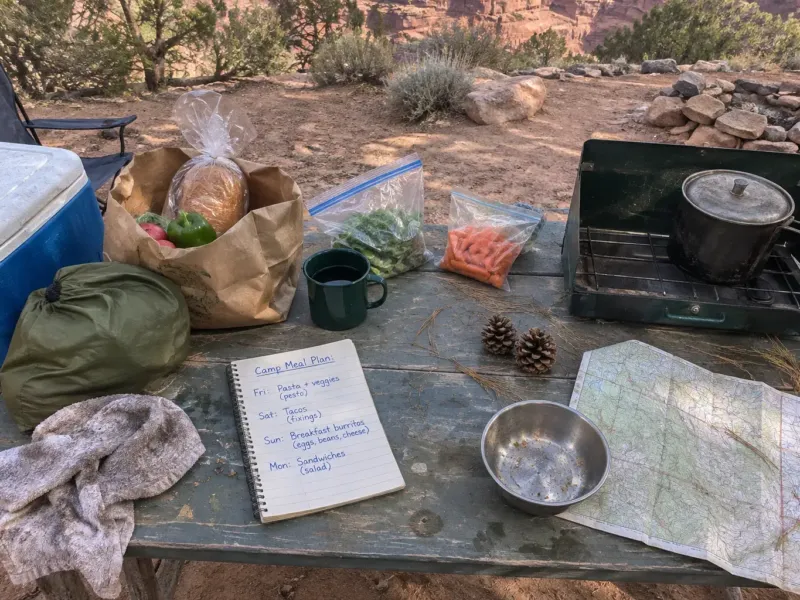
Put fresh meat, fish, eggs and dairy-heavy meals on Day 1 and early Day 2. Make Day 3 meals shelf-stable, like pasta with a jarred sauce, canned beans with rice, or tortillas with peanut butter. Pick one easy no-cook lunch each day so you only cook twice a day.
-
Reuse ingredients across meals
Choose recipes that share ingredients, such as tortillas, cheese, onions, peppers and rice, so you buy and carry less. Aim for one pot or pan per meal to keep cleanup and fuel use low. A simple template is eggs or oatmeal for breakfast, wraps or sandwiches for lunch, and a one-pot dinner.
-
Calculate amounts and add a buffer
Use the portion chart below as a starting point, then add about 10% extra because people eat more outdoors. Add 2–3 snacks per person per day, like nuts, fruit, jerky or granola bars. Pack one extra no-cook meal in case weather or a stove problem ruins a plan.
-
Prep at home and freeze what you can
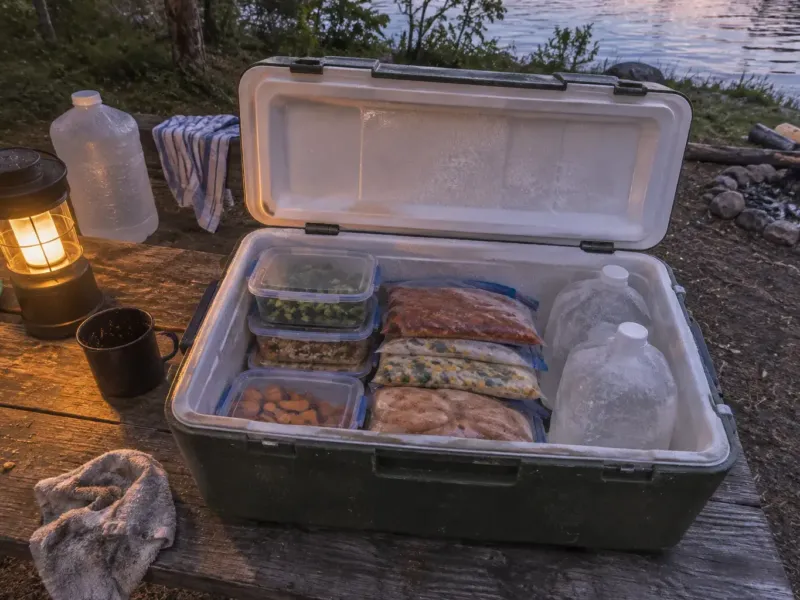
Chop vegetables, measure dry ingredients into labeled bags, and portion marinated meat into freezer bags. Freeze raw meat solid so it works as ice in the cooler and stays cold longer. Label each bag with the day and meal, such as 'D2 dinner'.
-
Pack the cooler in reverse meal order
Put Day 3 items on the bottom and Day 1 items on top, with raw meat sealed in bags on the lowest layer so juices can't drip onto other food. Keep the cooler at 40°F (4°C) or below, check it with a thermometer, and keep it shaded with the lid closed. Store dry goods in a separate bin. See our guide on packing a cooler so ice lasts.
-
Plan water and fuel
Plan about 1 gallon (4 L) of water per person per day for drinking, cooking and cleanup, or know where treated water is available and how you'll purify it. Bring a spare fuel canister or propane cylinder rather than guessing, and buy firewood locally if you plan to cook over a fire.
-
Plan food storage, cleanup and leftovers
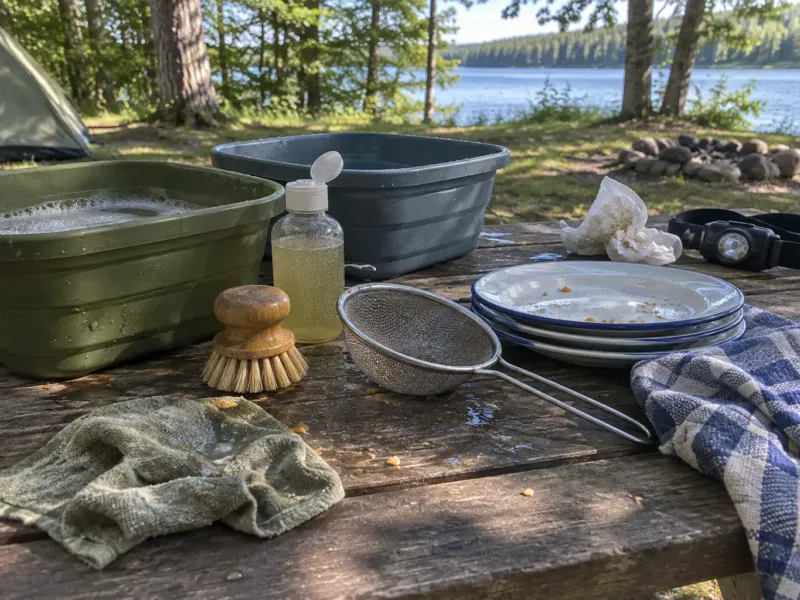
Decide where food will be locked up at night (vehicle or bear box, depending on the area) and cook only what you'll eat so there are no leftovers. Wash dishes at least 200 feet (about 70 adult steps) from water sources, strain out food bits and pack them out as trash. Leftover perishable food should be discarded after 2 hours, or 1 hour if it's above 90°F (32°C).
Tips
- Do a 'fridge check' on the morning of Day 2: if ice is mostly gone and the cooler is above 40°F, cook or toss the raw meat first.
- Keep a one-page menu taped inside the cooler lid or dry bin so anyone can see what's cooking tonight.
- Use a separate small cooler or bag for drinks so the food cooler stays closed.
- Bring a few spice-kit basics (salt, pepper, oil, hot sauce) in a small container so simple meals taste good.
- Pack a trash bag, paper towels and zip bags before you leave so food packaging doesn't pile up at camp.
Sample 3-Day Menu
| Day | Breakfast | Lunch | Dinner |
|---|---|---|---|
| 1 | Eat at home or bagels and fruit | Sandwiches and chips | Burgers or sausages with a pre-chopped salad |
| 2 | Scrambled eggs and tortillas | Wraps with cheese and salami | Foil packets or chicken fajitas (marinated, frozen) |
| 3 | Oatmeal with nuts and dried fruit | Peanut butter and banana tortillas | Pasta with jarred sauce and canned vegetables |
Rough Portions Per Adult, Per Meal
| Food | Amount |
|---|---|
| Dry pasta | 3–4 oz (85–115 g) |
| Dry rice | 1/2 cup (about 90 g) |
| Raw meat or fish | 5–6 oz (140–170 g) |
| Eggs (breakfast) | 2–3 |
| Dry oatmeal | 1/2–3/4 cup |
| Tortillas (wraps) | 2–3 |
Campers ask
How much food do I need per person for 3 days of camping?
Plan on about 2,000–3,000 calories per adult per day, which works out to nine meals plus 2–3 snacks per day. Add roughly 10% extra, and a backup no-cook meal.
What should I eat first on a camping trip?
Eat the most perishable items first: raw meat, fish, eggs and fresh dairy go on Day 1 or early Day 2. Save canned, dried and shelf-stable foods for Day 3.
Can I use eggs and raw meat on a 3-day trip?
Yes, if the cooler stays at 40°F (4°C) or below. Freeze raw meat before you leave, keep eggs in their carton, and use both by Day 2 to be safe.
Do I need a cooler for a 3-day trip?
Not if you pack shelf-stable meals like dried pasta, rice, canned beans, tortillas, nut butter and hard cheese. For fresh meat and dairy you do, so plan the menu around what the cooler can hold.