Cleanup · How-to
How to Wash Dishes While Camping (The 3-Bin Method)
- Time15 min
- SkillEasy
- Steps7
By TrailFed · Updated November 2026
Use three bins: scrape every scrap into the trash, wash in hot soapy water, rinse in clean water, then sanitize or air-dry. Strain the gray water, pack out the food bits and scatter the water at least 200 feet from lakes and streams, or use the campground's dish station.
 Illustrative Photo
What you need
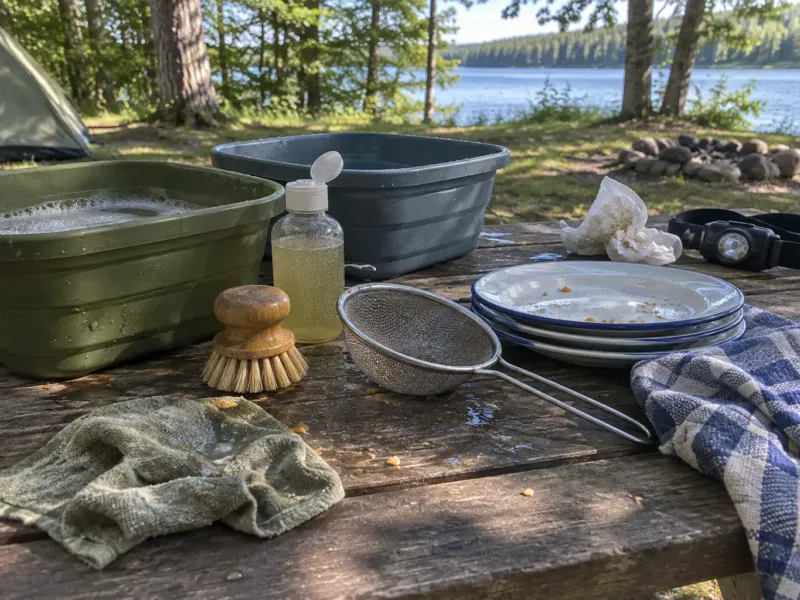
- 3 collapsible bins or tubs
- Biodegradable camp soap
- A scrubber or sponge and a plate scraper
- A pot for heating water
- A fine strainer or mesh screen
- A trash bag for food scraps
- A drying rack, mesh bag or clean towel
Step by step
-
Scrape first
Wipe and scrape every plate and pot into the trash while the food is still soft. The less food that hits the water, the easier everything else is.
-
Heat the water
Warm a pot of water while you eat. Hot water cuts grease far better than cold, and you will use less soap.
-
Set up three bins
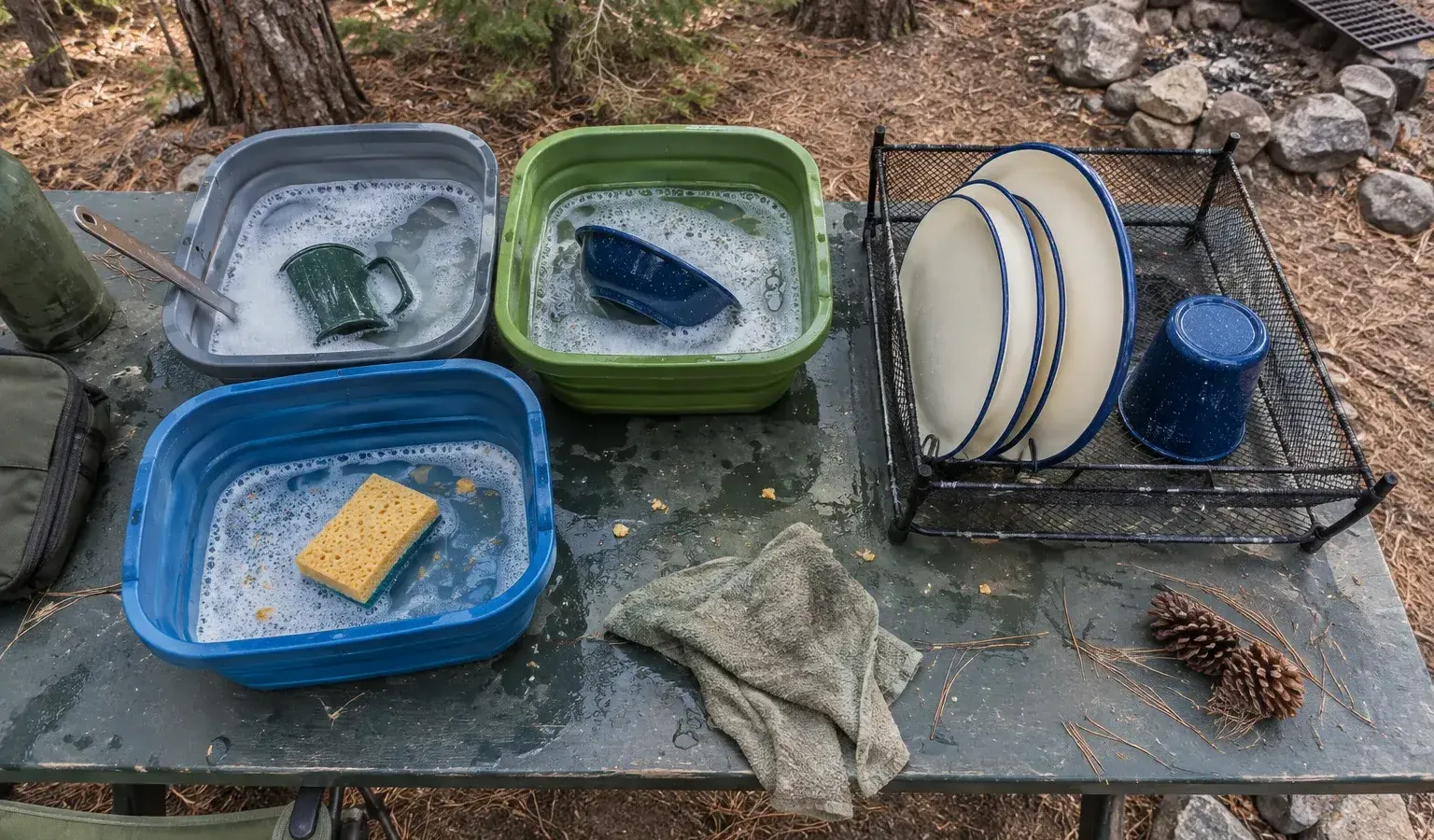
Bin 1: hot water with a few drops of soap. Bin 2: clean rinse water. Bin 3: clean water for a final rinse, or a sanitizing rinse if you prefer.
-
Wash cleanest to dirtiest
Wash cups and utensils first, then plates, then cooking pots. Your wash water stays usable longer that way.
-
Rinse and dry
Rinse in bin 2, dip in bin 3, then air-dry on a rack or in a hanging mesh bag. Air-drying is cleaner than a damp towel.
-
Strain the gray water
Pour the used water through a strainer. Put the caught food bits in your trash to pack out.
-
Dispose of the water properly
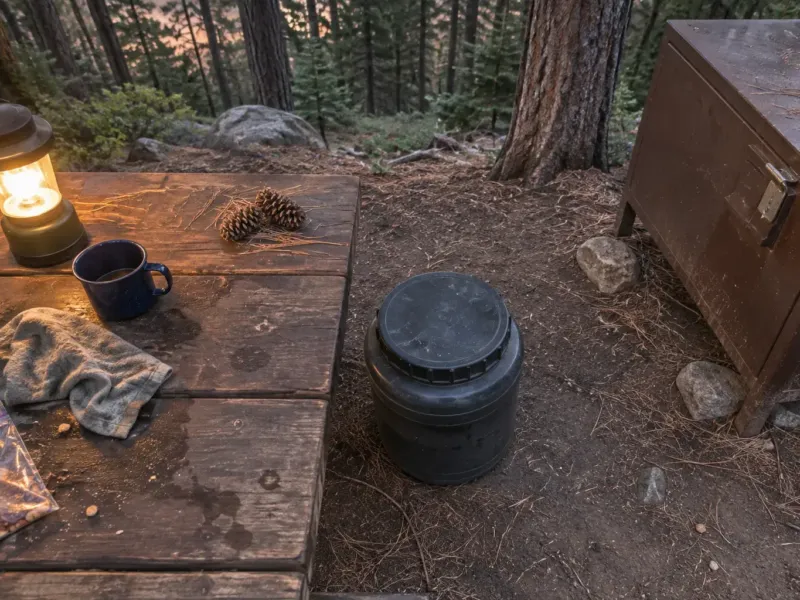
Use the campground's dish station or gray water drain if there is one. If not, walk at least 200 feet (about 70 big steps) from water, camp and trails and fling the water in a wide arc so it spreads out.
Tips
- Even biodegradable soap should never go directly into a lake or stream.
- A drop of soap goes a long way. Too much just means more rinsing.
- Wash right after the meal, before food dries on and before animals come looking.
- Wipe greasy pans with a paper towel first and pack it out with the trash.
Why the 3-bin method works
Separating wash, rinse and final rinse keeps soap and grease out of your clean dishes, and keeps you from hauling extra water. Collapsible bins nest flat in a gear tote.
Check the rules where you camp
Many campgrounds want dishwater in a specific drain, and some areas do not allow gray water on the ground at all. A quick look at the posted rules or the ranger station saves trouble.
Campers ask
Where do you dump dishwater when camping?
Use the campground's dish station or gray water drain if there is one. Otherwise strain out food, pack it out, and scatter the water at least 200 feet from water sources, camp and trails.
Can I use regular dish soap while camping?
A few drops of biodegradable camp soap is the better choice. Whatever you use, keep it out of lakes and streams.
Do I need to sanitize camp dishes?
Hot soapy water and a clean rinse is enough for most trips. A sanitizing rinse adds peace of mind when you are handling raw meat.
How do you wash dishes when backpacking?
Use one pot: scrape it clean, add a little hot water, scrub, drink or strain the rinse, and scatter the strained water 200 feet from water.